

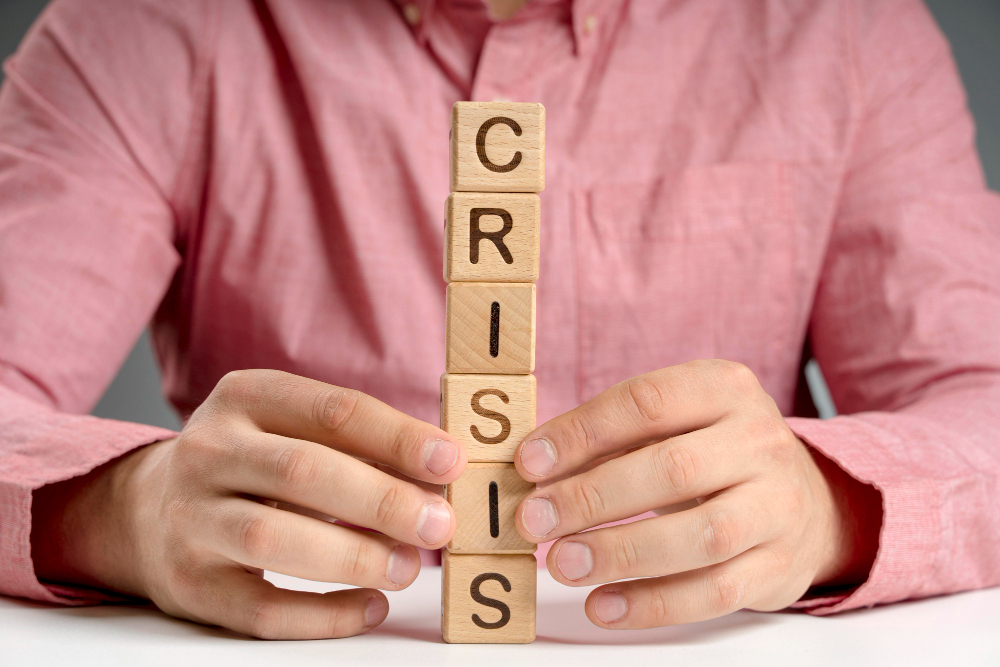



ThoughtFull Crisis
Critical Incidence & Disaster Support

When a crisis happens at work, your people shouldn’t face it alone. Activate rapid, structured psychosocial support to stabilise teams and guide next steps.

Aligned with UNDSS and ICISF policies and guidelines to deliver rigorous support

🚨What counts as a "critical incident"? ⚠️

A critical incident is a sudden, unexpected, overwhelming event outside normal experience, such as employee loss due to accident or suicide, serious injury, disaster, or traumatic workplace events.

What ThoughtFull Crisis delivers

Immediate stabilisation & structured support
Rapid psychosocial support to help teams stabilise, process the incident, and access next-step care
Session components
(group or individual)
Trauma-informed group or 1:1 sessions with check-ins, grounding tools, and clear next steps
Timely intervention
Hotline support within 12–24 hours, and virtual/onsite group or individual care mobilised within 72 hours of activation
How activation works?
When a critical incident occurs, ThoughtFull Crisis is designed to activate quickly and move your team from immediate stabilisation to structured support without adding operational burden to your stakeholders.
Step 1 - Request activation
Contact your Client Success team to initiate a crisis activation, share the incident context, and confirm urgency and immediate needs
Step 2 - Align on scope & format
We determine the right response plan, whether virtual or onsite, group and/or 1:1 sessions, number of impacted employees, preferred dates, and any practitioner requirements (e.g., language or cultural considerations).
Step 3 - Mobilise and deliver support
We coordinate ThoughtFull Professionals to deliver timely psychosocial support, including facilitated group sessions and/or individual sessions, plus grounding tools and coping guidance.
Step 4 - Close with recommendations
After delivery, you receive a post-activation report with session agenda, summary, observations, and recommended next steps to support ongoing recovery.

What you’ll receive after support

After the crisis activation is completed, you’ll receive a post-activation report that helps you understand what was delivered, what themes emerged, and what to do next, while keeping employee privacy and confidentiality front-of-mind.
Session agenda & summary
High-level recap on what was covered and happened
Observations & practitioner impressions
Non-identifying patterns and themes observed across group or individuals
Recommendations & next steps
Practical guidance for leaders on follow-up actions
Crisis support in action
From sudden loss to high-impact workplace incidents, ThoughtFull Crisis delivers timely, trauma-informed support: coordinated fast, delivered with care, and backed by clear post-activation recommendations.
Sudden employee death
What happened: An employee on holiday abroad was swept into a river and was missing for three days, creating prolonged uncertainty before news was communicated internally.

Who was affected: A mixed group of leadership and associates (38 people), including office-based roles responsible for team management, stakeholder communication, and business continuity while emotionally supporting colleagues.

Support delivered: ThoughtFull mobilised support once the news was released; support was delivered over 2 days, with separate onsite and virtual group sessions, facilitated by ThoughtFull Professionals.

If support isn’t implemented: Corporate teams often see rumour spirals, emotional spillover into decision-making, reduced psychological safety, and leadership burnout, which can quickly translate into miscommunication risk, morale decline, and higher absenteeism/attrition during an already sensitive period.
Severe onsite incident affecting frontline operations
What happened: A facility fire resulted in two severe injuries and one fatality, triggering concerns around fear, morale, and PTSD; for many staff, it was their first exposure to counselling/mental health support.

Who was affected: Approximately 30 factory workers working in high-risk operational roles where confidence returning to the site directly influence safety outcomes.

Support delivered: ThoughtFull mobilised onsite group counselling to process the incident, a short segment on PTSD symptom awareness, and fitness-for-work screening to identify employees most heavily affected; group and individual sessions were delivered across 2 days by ThoughtFull Professionals.

If support isn’t implemented: In frontline environments, unaddressed post-incident stress can escalate into hypervigilance, panic triggers, avoidance, conflict, and reduced attention, increasing the likelihood of safety lapses, delayed return-to-work, higher incident recurrence risk, and longer-term PTSD-related impairment, especially when teams must return to the same worksite.
3. Intervene
Deploy the right solutions at the right time. OMWA links each insight to tailored interventions, ranging from workshops and leader support to app-based resources and counselling, addressing issues at both individual and organisational levels.
4. Evaluate
Reassess to track progress and impact. Post-intervention results are compared against baseline scores, helping you measure effectiveness, refine strategies, and use flexible credits to deploy targeted therapy sessions or activation programmes that address your teams’ priority wellbeing needs.

Frequently asked questions

What is ThoughtFull Crisis?

ThoughtFull Crisis is a structured psychosocial support response for organizations following a critical incident, designed to help affected employees stabilize, understand normal trauma responses, and access appropriate next-step care.

What counts as a “critical incident”?

A critical incident is a sudden, unexpected, overwhelming event outside normal experience—such as a workplace accident, serious injury, employee loss (including suicide), disaster, or other traumatic events that impact teams.

Is support available virtually or onsite?

Both. We can deliver virtual care, onsite care, or a planned mix depending on your needs.

Do you offer group sessions, individual sessions, or both?

Both, group and individual therapy are available. Group sessions are typically capped at 10–12 participants per group.

How soon can you respond?

Hotline support is available within 12–24 hours of activation; virtual/onsite group or individual care can be mobilised within 24 - 72 hours

What happens after the sessions?

Sessions generally include guided check-ins, psychoeducation on trauma responses, grounding/breathing techniques, coping tools, and closing guidance on next steps and available support.

What information do you need to activate support?

We’ll confirm the incident context, number of impacted employees, preferred delivery format (virtual/onsite), desired mix of group vs. 1:1, timelines, and any practitioner requirements (e.g., language or cultural considerations).

How do you handle confidentiality and privacy?

Care is delivered with confidentiality as a priority; any reporting is shared at a high level and focuses on themes and recommendations, without identifying individuals.

Need to activate crisis support?

We'll help you coordinate the right response, fast.